 EN
EN

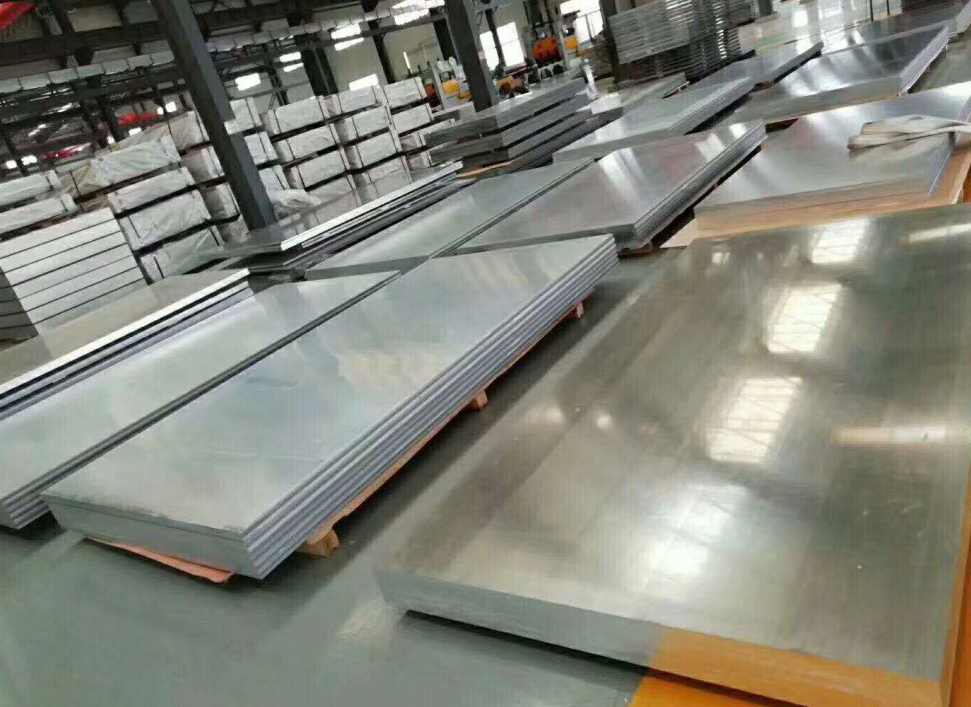
Key Thickness Requirements for Hygienic Food Processing Applications
Minimum and Maximum Thickness Ranges by Equipment Type (Conveyors, Tanks, Hoppers)
The right stainless steel sheet thickness needs to strike a balance between being strong enough, staying clean, and not breaking the budget. For conveyors, most manufacturers go with around 12 to 16 gauge steel, which works well against regular wear and tear while keeping everything aligned properly for cleaning. Tanks are another story entirely since they deal with internal pressures, vacuum forces, and those frequent CIP cleaning cycles. That's why we usually see tanks built with thicker steel ranging from 7 to 10 gauge. When it comes to hoppers that handle dry materials or abrasives, 14 to 18 gauge tends to work best. It gives good strength without making things too heavy, and helps maintain even weld seams during fabrication. Going beyond these recommended ranges can lead to problems like warping, tiny cracks forming over time, or just wasting money on extra material that isn't needed. And don't forget about keeping the thickness consistent across sheets too. Variations larger than 0.05 mm can cause issues with welding quality, joint strength, and how well the final product will polish after welding.
Critical Tolerance Standards for Weld Integrity and Surface Finish Uniformity (Ra ≤ 0.8 µm)
Getting the right surface finish and maintaining tight dimensional control is absolutely critical when it comes to controlling microbes in processing equipment. According to both ASME BPE standards and FDA guidelines, surfaces need to have a roughness average (Ra) no higher than 0.8 micrometers. This level of smoothness can only be achieved if the base material has consistent thickness throughout and all welds are done without flaws. For welded joints specifically, we're looking at keeping surface deviations below 0.1 mm to prevent places where bacteria might hide. Large panels should stay within 0.3 mm per meter flatness tolerance so cleaning solutions run off predictably instead of pooling. When sheet metal varies more than plus or minus 5% in thickness, problems start happening during steam sterilization cycles because different parts expand at different rates. This uneven expansion leads to weld fatigue over time and creates tiny gaps where contamination risks increase. Most manufacturers still rely on electropolishing following precision grinding as their go-to method for hitting those Ra requirements under 0.8 micrometers while keeping the stainless steel underneath intact and corrosion resistant.
How Mechanical Demands Dictate Stainless Steel Sheet Thickness Selection
Load-Bearing vs. Non-Structural Use: Impact of Pressure, Vibration, and Thermal Cycling
The right thickness choice depends heavily on mechanical service conditions, not just what sits still and holds weight. Components that actually bear loads like conveyor frames, tank supports, and agitator mounts deal with constant pressure above 50 psi, vibrations happening faster than 15 times per second, plus regular temperature changes. For these parts, going with 12 to 16 gauge material (about 2.05 to 1.65 mm thick) is pretty much mandatory if we want to avoid problems like metal creeping out of shape, buckling under stress, or having those pesky welds come apart after months of operation. Things that aren't structural but still get beat up daily, such as hopper covers, access doors, or splash guards, can technically work with thinner sheets ranging from 18 to 22 gauge (around 1.25 to 0.61 mm). But watch out! These items face serious thermal challenges too. Daily cleaning cycles subject them to temperature swings between 100 and 200 degrees Fahrenheit. Stainless steel expands when heated at about 0.000017 inches per inch per degree F, so anything thinner than roughly 0.08 inches (about 2 mm) tends to warp or develop cracks after repeated exposure to steam. And let's not forget about all that vibration coming from nearby machinery which makes things even worse in areas where support isn't quite right. Getting the thickness right upfront stops those tiny cracks from forming, which matters because they weaken the structure and compromise the smooth surfaces needed for proper hygiene maintenance.
| Application Type | Thickness Range | Key Stress Factors | Failure Risk if Undersized |
|---|---|---|---|
| Load-Bearing | 12–16 gauge | Pressure > 50 PSI, Vibration > 15 Hz | Deformation, weld failure |
| Non-Structural | 18–22 gauge | Thermal cycling ΔT > 150°F | Warping, fatigue cracks |
This mechanical balance ensures long-term compliance with Ra ≤ 0.8 µm surface finish requirements—since surface degradation often begins at thermally stressed or vibration-fatigued thin sections.
Corrosion Resistance, Grade Choice, and Their Effect on Optimal Stainless Steel Sheet Thickness
304 vs. 316 Stainless Steel: Chloride Resistance and Its Allowance for Thinner Gauges in Sanitary Zones
The grade of stainless steel chosen has a big impact on what thickness can be used, especially where there's exposure to chlorides. Regular old 304 stainless works fine in areas with low chloride levels, but once we hit around 200 parts per million chloride according to ASTM standards, it starts showing signs of weakness. That means problems with pitting can develop in places like seafood processing plants, brine storage tanks, or anywhere they clean with sodium hypochlorite solutions. When this happens, manufacturers typically go for thicker material, maybe 14 gauge instead of the standard 16 gauge. For tougher conditions, Grade 316 stainless is the way to go. With about 2 to 3 percent molybdenum added, it stands up to chloride concentrations approaching 1,000 ppm. This lets engineers design equipment that's actually thinner and lighter while still keeping costs down. Tanks that would have needed 14 gauge with regular 304 can now use 16 gauge with 316 without compromising hygiene standards or surface finish quality (those smooth surfaces last longer too). The savings from reducing thickness by roughly 10 to 15 percent work out well in high-risk food production areas, provided the surfaces get proper treatment and chemical compatibility checks follow FDA guidelines in section 21 CFR Part 178.
Compliance and Certification: Ensuring Your Stainless Steel Sheet Meets Food Safety Standards
ASTM A240, ASME BPE, and FDA 21 CFR Part 178 Thickness-Linked Compliance Thresholds
Meeting regulatory requirements depends heavily on proper thickness specifications rather than being something optional. The ASTM A240 standard outlines what kind of mechanical strength and thickness variations are acceptable for stainless steel plates and sheets that come into contact with food products. Take storage tanks as an example. When they're subjected to steam sterilization processes or high pressure wash downs, the stainless needs at least 1.5mm thickness to hold up against all those temperature changes over time. ASME BPE goes even further by setting a maximum surface roughness of 0.8 micrometers. This specification matters because if the material isn't consistently thick throughout, welds won't form properly during fabrication and polishing results will vary across different sections, which can actually create hiding spots for bacteria. Looking at FDA regulations under 21 CFR Part 178, there are strict limits on how much material can leach out when in contact with food. Insufficient thickness becomes a problem especially in acidic conditions or saltwater environments where corrosion happens faster and metal ions start migrating into the contents. For 304 stainless steel exposed to acidic substances over long periods, manufacturers need to stick with a minimum thickness of 2.0mm. Third-party certifications like NSF/ANSI 2 or EHEDG help confirm that what arrives on site actually matches these thickness requirements. Failure to meet these standards isn't just about getting caught during inspections either. Real issues develop in practice too, including crevices where corrosion starts, areas where biofilms get trapped, and surfaces that degrade permanently over time.
FAQ
What is the role of surface finish in food processing applications?
The surface finish is crucial in food processing applications as it helps control bacterial growth. According to industry standards, like ASME BPE and FDA guidelines, surfaces need to maintain a roughness average (Ra) no higher than 0.8 micrometers to ensure hygiene and prevent microbial contamination.
Why is the choice between 304 and 316 stainless steel important?
The choice between 304 and 316 stainless steel is significant due to their different chloride resistance levels. Grade 316 contains molybdenum, which enhances its resistance to chloride, making it more suitable for environments with high chloride concentrations.
How does stainless steel sheet thickness affect compliance with food safety standards?
Stainless steel sheet thickness directly impacts compliance with food safety standards, as insufficient thickness can lead to structural weaknesses, bacterial hideouts, and faster corrosion, especially in acidic and saltwater environments.
Table of Contents
- Key Thickness Requirements for Hygienic Food Processing Applications
- How Mechanical Demands Dictate Stainless Steel Sheet Thickness Selection
- Corrosion Resistance, Grade Choice, and Their Effect on Optimal Stainless Steel Sheet Thickness
- Compliance and Certification: Ensuring Your Stainless Steel Sheet Meets Food Safety Standards