 EN
EN

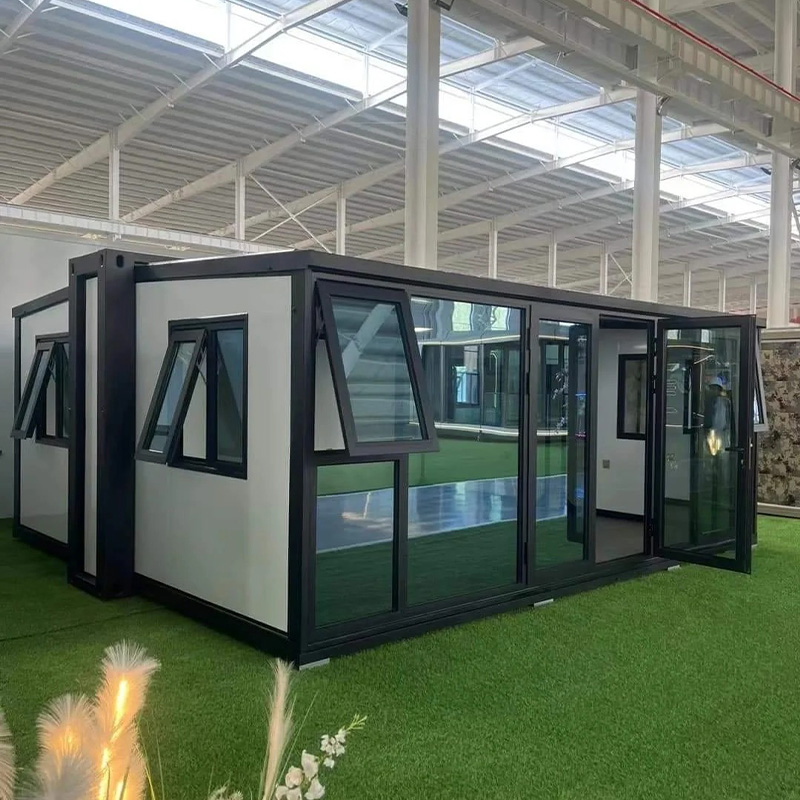
Understanding Seismic Resilience in Modular Living
When people first look into modular building options, safety is almost always at the top of the checklist. Over the past few years, stepping into a well-crafted 20ft container house has become surprisingly common for remote mining camps, eco-resorts, and urban backyard offices alike. But beyond the sleek industrial aesthetic and quick setup times, a vital question remains: how well does it actually hold up when the earth shakes? Experience from field engineers and structural specialists shows that corrugated steel boxes built to ISO standards possess an innate structural toughness that traditional wood-frame or brick buildings often struggle to match under sudden lateral forces.
The Metallurgical Advantage of Heavy-Gauge Steel Framing
The secret behind the earthquake resistance of a standard 20ft container house lies primarily in its material makeup. Unlike conventional stick-built construction that relies on rigid, brittle mortar or timber joints prone to snapping under shear stress, modular units use high-strength weathering steel frames and corrugated panels. These components are continuously welded together to form an integral monocoque box. When seismic waves strike, the steel frame acts as a unified cage that flexes rather than fractures, absorbing kinetic energy and safely distributing stress across the entire perimeter.
| Structural Component | Material Specification | Seismic Function |
| Corner Castings | Forged SCW49 Steel | Absorbs primary multi-axis stress and locks modular joints securely. |
| Corrugated Wall Panels | 1.6mm - 2.0mm Corten Steel | Provides lateral shear resistance and prevents structural warping. |
| Floor Crossmembers | Cold-formed C-channel Steel | Maintains rigid floor diaphragm integrity during ground motion. |
Engineering Insights and Real-World Performance
Structural engineering data gathered from active fault zones confirms that steel modular structures exhibit exceptional ductility. In practical terms, ductility means the material can undergo significant plastic deformation without losing its load-bearing capacity. Technical consultants and seismic safety authorities frequently note that because a 20ft container house has a relatively low dead weight compared to concrete structures, it attracts less seismic inertial force during an earthquake. This combination of low mass and high tensile strength dramatically reduces the risk of catastrophic collapse.
Kinetic Energy Dissipation Through Modular Joints
Another fascinating aspect of modular architecture is how individual units handle ground acceleration. In multi-unit setups or even standalone configurations, the heavy-duty corner castings act as natural shock absorbers. Instead of rigidly resisting every tremor, the structural nodes allow minute, controlled amounts of kinetic energy to dissipate through bolted connections and flexible sealants. This engineered give-and-take prevents stress concentrations from building up at critical corner joints, ensuring the interior living envelope stays safe and intact.
| Building Type | Seismic Response Mechanism | Ductility Rating | Collapse Risk |
| 20ft Container House | Flexible steel monocoque frame & ISO corner dissipation | High (Elasto-plastic) | Very Low |
| Traditional Brick Masonry | Rigid mass load with brittle shear failure | Low (Brittle) | High |
| Standard Timber Frame | Semi-flexible nailed joinery with fastener pullout risk | Medium | Moderate |
Global Manufacturing Standards and Supply Chain Value
Investing in reliable disaster-resistant housing requires partnering with proven industry leaders who control every stage of production. Songchen leverages advanced automated robotic welding, rigorous ultrasonic flaw detection, and strict quality control protocols across its state-of-the-art manufacturing facilities. By streamlining global supply chain logistics and precision prefabrication, Songchen delivers robust, earthquake-engineered modular solutions that meet international building codes. Whether deployed in seismic active zones or remote rugged terrain, these structures offer unmatched peace of mind, combining certified safety with turnkey commercial efficiency.