 EN
EN

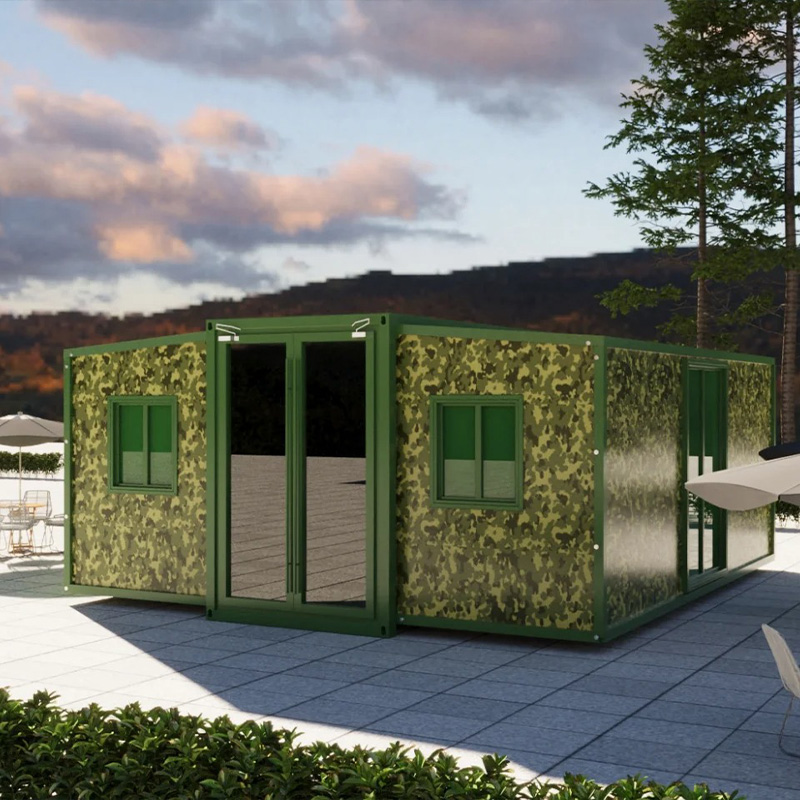
The Precision Question in Prefab Construction
One of the first questions that comes up when discussing prefab container houses is about precision. There’s a lingering perception, often left over from older construction methods, that factory-built structures are somehow less exact, more "rough and ready" than site-built ones. In reality, that perception is outdated. Modern manufacturing for prefab container houses is defined by precise engineering, automated cutting, and controlled assembly environments—factors that site-built construction often struggles to match. Understanding the real meaning of installation precision is not just a technical exercise; it directly impacts the building's safety, longevity, and the end-user's satisfaction. This is about ensuring that a structure designed in a factory fits together perfectly on any site around the world.
Defining Precision: From Factory Floor to Site
Installation precision for a prefab container house is a dual-phase concept. It begins in the factory with manufacturing tolerances—how straight the steel frame is, how accurately the corner castings are positioned, and how consistent the panel dimensions are. As seen with established manufacturers like Songchen, standardized production processes are key. They involve precise laser cutting, robotic welding, and jig-based assembly to ensure that every connection point aligns within millimeters. This is not a luxury but a fundamental requirement. The second phase is on-site assembly precision. This isn't just about placing a box on the ground; it’s about the accurate alignment of modules, the perfect mating of locking mechanisms, and the seamless integration of plumbing and electrical interconnections. The goal is to achieve the "plug-and-play" promise, where modules connect as easily as high-quality components in a precision machine.
On-Site Realities: Where Precision Meets the Ground
Let’s talk about what this looks like on a real job site. In a recent project for a remote mining camp, the ground was anything but perfectly level, a common scenario. The installation team, equipped with laser levels and high-strength adjustable leveling feet—often supplied with the house—began the setup. The first module was craned into place. Using the corner castings as reference points, the team shimmed and adjusted until the module was perfectly level and square. Only then was the next module brought in, its alignment guided by the engineer’s mark. The connection was seamless. Compare that to a scenario with lower precision: a module arrives with a slight twist in the frame, or poorly placed attachment points. The entire installation becomes a struggle. Bolts don’t align, doors stick, and gaps appear, compromising the weather-tight seal. That scenario leads to costly on-site fixes and frustrated clients.
The Benchmarks of a Precision Installation
What does a precise installation actually deliver? It ensures the structure performs as designed. This is where we move from theory to tangible results, as shown in the table below.
Table 1: Impact of Installation Precision on Key Performance Areas
| Performance Area | With High Precision | With Low Precision |
|---|---|---|
| Structural Integrity | Loads are transferred evenly; connections are secure, ensuring stability and wind resistance as designed. | Uneven load distribution; stress points can lead to premature wear or failure under load. |
| Weather & Moisture Seal | Gaskets and seals mate perfectly, providing a reliable barrier against water and air infiltration. | Gaps and compression points create thermal bridges and potential leak paths, leading to energy loss and water damage. |
| Finishing & Fitment | Doors, windows, and joinery fit correctly and operate smoothly from day one. | Misalignments cause binding, sticking, and difficulty in closing; finishes are stressed and may crack over time. |
| Speed of Assembly | Modules connect quickly and intuitively; the install proceeds per the project schedule. | Constant adjustments and rework are needed, significantly delaying the project and increasing labor costs. |
The Business Case: Precision Pays Off
The value of precision becomes most apparent when considering the long-term commercial implications. A building that lacks precision at installation will cost more over its lifespan. The financial benefits of choosing a precisely manufactured and installed prefab container house are substantial.
Table 2: Total Cost of Ownership Comparison (5-Year Projection)
| Cost Factor | High-Precision Installation | Low-Precision Installation |
|---|---|---|
| Initial Installation Labor | Standard, predictable cost; teams are efficient. | Higher cost due to delays, rework, and time spent fixing misalignments. |
| Energy Costs | Lower, as the building envelope is airtight and insulation is uncompromised. | Higher, due to thermal bridging and air leakage, leading to higher HVAC usage. |
| Maintenance & Repairs | Minimal; primarily cosmetic and preventative. | Higher; includes addressing leaks, repairing binding doors/windows, and structural fixes. |
| Future Expandability | Seamless; new modules can be added and connected without structural interference. | Difficult; misaligned modules may not be compatible with future additions. |
Why Your Choice of Manufacturer Defines Precision
Ultimately, the precision of a prefab container house installation is not determined on the job site; it is determined in the design and manufacturing phase. It is the result of a manufacturer's commitment to quality control, investment in skilled labor, and rigorous quality assurance. A manufacturer that operates with a "Quality First, Service Always" philosophy, like Songchen Steel Co., Ltd., builds precision into every component. With over 20 years of industry experience, a team of 80+ skilled professionals, and a track record of supplying more than 3,000 houses to over 100 countries, Songchen understands that true precision is the foundation of a reliable, durable, and safe structure. For the project manager, the architect, or the developer, choosing such a partner is the single most important step in ensuring that the promise of rapid, high-quality construction is fully realized. It’s about ensuring that a container house is not just built, but built right.