 EN

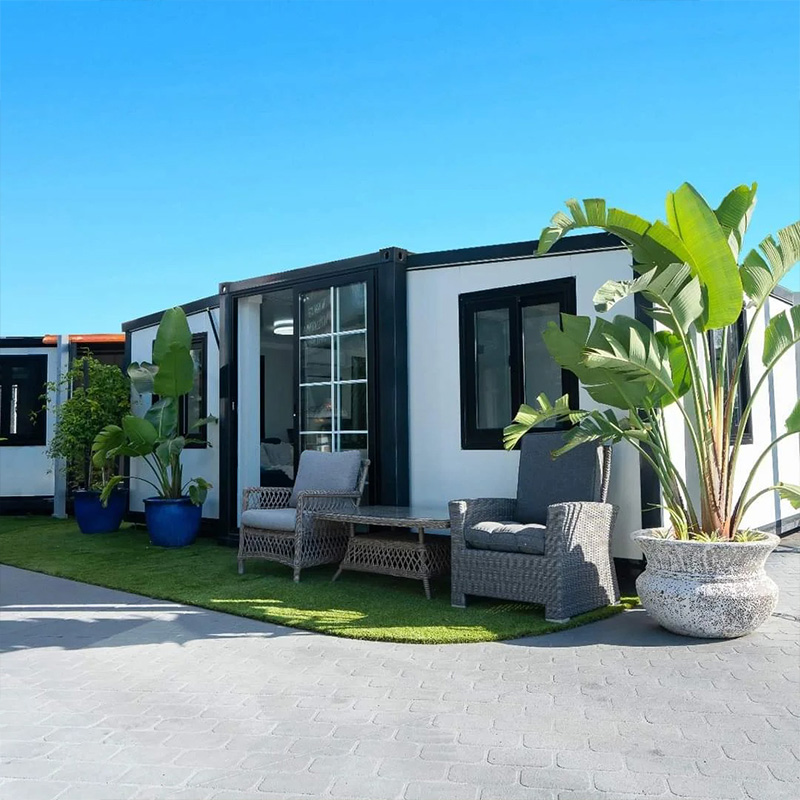
Why Standard Ventilation Fails in a 40ft Container House
Thermal Mass and Heat Buildup in Steel Enclosures
The steel envelope of a 40ft container house acts as a high-conductivity thermal battery—its ~50 W/m·K conductivity transfers outdoor temperature swings almost instantly through 14-gauge Cor-Ten walls, while its substantial mass absorbs heat by day and radiates it slowly at night. This dual effect can drive interior surface temperatures above 65 °C (150 °F) in direct sun, creating a greenhouse-like environment that standard window-based cross-ventilation cannot offset. Unlike timber-framed homes with inherent thermal breaks, the monolithic steel shell offers no resistance to conductive or radiant heat gain. Even with wall insulation, untreated thermal bridges—especially at the roof junction and floor-to-wall connections—continue to radiate heat, overwhelming passive air exchange and forcing reliance on mechanical cooling for occupant comfort.
Condensation Risks from Moisture Trapping in Sealed High-Cube Designs
Steel enclosures are effectively airtight, trapping moisture generated by daily living: a single occupant releases 0.5–1 L of water vapor over eight hours; cooking adds 2–3 L per meal. In a high-cube 40ft container—with its 9′6″ ceiling height—warm, humid air stratifies near the roof, forming a concentrated moisture pocket beyond the reach of standard low- or mid-wall vents. When indoor air cools below the dew point, condensation forms directly on the cold steel skin, accelerating corrosion, promoting mold growth, and degrading structural integrity over time. Without a ventilation strategy that actively exchanges humid indoor air for drier outdoor air—rather than merely exhausting localized pockets—the closed-loop cycle of moisture generation and condensation will compromise both occupant health and long-term durability.
Passive Ventilation Design Principles for a 40ft Container House
Optimizing the Chimney Effect with Vertical Vent Placement
The chimney (or stack) effect leverages warm air’s natural buoyancy to drive continuous, energy-free airflow. In a 40ft container house, this is amplified by strategic vertical vent placement: low-level intake vents on the shaded side draw cooler outside air into the space, where it warms, rises, and exits through high-level exhaust vents—ideally positioned near the ceiling or on the roof on the opposite wall. A vertical separation of just 2.5 m (typical between floor and high-cube ceiling) creates enough pressure differential to generate measurable flow. Roof-mounted turbine vents or solar chimneys further enhance performance by adding height and localized heat gain at the exhaust point. Crucially, avoid aligning intake and exhaust at the same elevation—this eliminates the pressure gradient required for effective stack-driven ventilation. The result is a silent, self-sustaining loop that improves air quality without energy input.
Cross-Ventilation Pathways Across Opposite Walls in 40ft Containers
Cross-ventilation uses wind pressure differences to push stale air out and pull fresh air in. In a 40ft container house, placing openings on opposite long walls establishes a direct, unobstructed pathway across the full 40-foot span—an advantage that supports longer dwell time for air to cool as it traverses the space. For optimal performance, position larger openings on the windward side (higher pressure) and slightly smaller ones on the leeward side (lower pressure) to increase airflow velocity and overcome internal resistance. Interior layout must support this path: keep doorways aligned and minimize partitions or large furniture that block the breeze. Where prevailing winds shift seasonally, adjustable louvers or casement windows allow real-time redirection of airflow. On temperate days, this simple, passive approach reliably replaces mechanical ventilation—reducing energy use while maintaining CO₂ levels below 1,000 ppm and supporting healthy indoor air quality.
Active Ventilation Systems Proven for 40ft Container House Conversions
ERV/HRV Integration: Balanced Air Exchange Without Energy Penalty
Standard exhaust-only fans waste conditioned air and risk depressurizing the tightly sealed container, drawing unfiltered outdoor air through micro-leaks. ERVs (Energy Recovery Ventilators) and HRVs (Heat Recovery Ventilators) solve this by enabling balanced, continuous air exchange while recovering thermal energy—and, in the case of ERVs, moisture—from the outgoing airstream. Per ASHRAE 2023 standards, properly installed HRVs recover up to 85% of sensible heat in winter; ERVs add latent recovery, critical in high-cube containers where indoor relative humidity can exceed 60% rapidly due to occupancy and cooking. Field data from Building Science Corporation (2022) shows ERVs reduce ventilation-related heating loads by 40–55% compared to exhaust-only systems. For a 40ft container, a unit rated at 60–100 CFM—drawing only 30–50 watts continuously—is typically sufficient. This maintains oxygen levels, holds CO₂ under 1,000 ppm, prevents negative pressure, and delivers measurable energy savings: all-electric container homes see $15–$25 lower monthly utility bills on average.
Solar-Powered Exhaust Fans vs. Ducted Mini-Splits: Real-World Performance for 40ft High-Cube Homes
Removing superheated air from a 40ft high-cube container demands active extraction—but system choice significantly impacts year-round livability. The table below compares field-validated performance in southwestern U.S. installations (2023) under 95°F outdoor conditions:
| System | Airflow (CFM) | Power Draw (W) | Cooling Capacity (BTU/h) | Humidity Control | Typical Daily Runtime (h) | Annual Energy Cost (USD) |
|---|---|---|---|---|---|---|
| Solar Exhaust Fan | 800–1,200 | 0 (solar) | N/A | Limited | 6–8 | $0 |
| Ducted Mini‑Split | 250–350 | 500–800 | 12,000 | Excellent | 10–14 | $180–$320 |
Solar exhaust fans lower peak ceiling temperatures by 12–18°F during peak sun but provide zero cooling at night or on cloudy days. In contrast, ducted mini-splits with fresh-air intake and MERV 13 filtration consistently maintain 74–76°F indoor temperatures and hold relative humidity at 45–50%—critical for preventing condensation and mold. Their higher energy cost is offset by year-round functionality (including heating), superior comfort, and long-term system reliability. For weekend retreats in consistently sunny climates, solar fans offer zero-operating-cost daytime purge. But for full-time occupancy, the optimal solution is often hybrid: a small solar fan for daytime heat purge paired with a mini-split for evening and overnight conditioning.
Critical Installation Best Practices for Long-Term 40ft Container House Ventilation
Installing ventilation in a 40ft container house requires precision to protect both structural integrity and indoor air quality. Begin by mapping all duct runs and penetrations before cutting—avoid compromising primary structural members like corner posts or roof beams. Seal every opening with flexible, UV-stable flashing designed for steel substrates to prevent moisture infiltration and air leakage. Insulate interior surfaces around vents and duct boots to eliminate cold-bridge condensation points on the steel shell. Mount fans, ERVs, and HRVs on vibration isolators to dampen noise transmission through the rigid frame. Provide accessible service panels for filters—clogged filters are the leading cause of system failure and performance loss. Finally, commission the system using a blower door test to verify balanced airflow, detect hidden leaks, and confirm that pressure differentials remain within safe, code-compliant ranges. These steps ensure durable, healthy, and efficient ventilation for decades.
FAQ
Why does standard ventilation fail in a container house?
Standard ventilation fails due to the steel shell’s high thermal conductivity and airtight design, which traps heat and moisture, overwhelming passive systems like cross-ventilation.
What is the chimney effect in container house ventilation?
The chimney effect uses warm air’s buoyancy to drive airflow. Strategic vent placement enables cool air intake and warm air exhaust, creating energy-free ventilation.
How do ERVs and HRVs improve container house ventilation?
ERVs and HRVs provide balanced air exchange while recovering heat or moisture, improving energy efficiency and maintaining air quality.
Are solar exhaust fans effective for container homes?
Solar exhaust fans are efficient for daytime heat purge but lack cooling at night or on cloudy days, making them best suited for sunny climates or hybrid setups.