 EN
EN

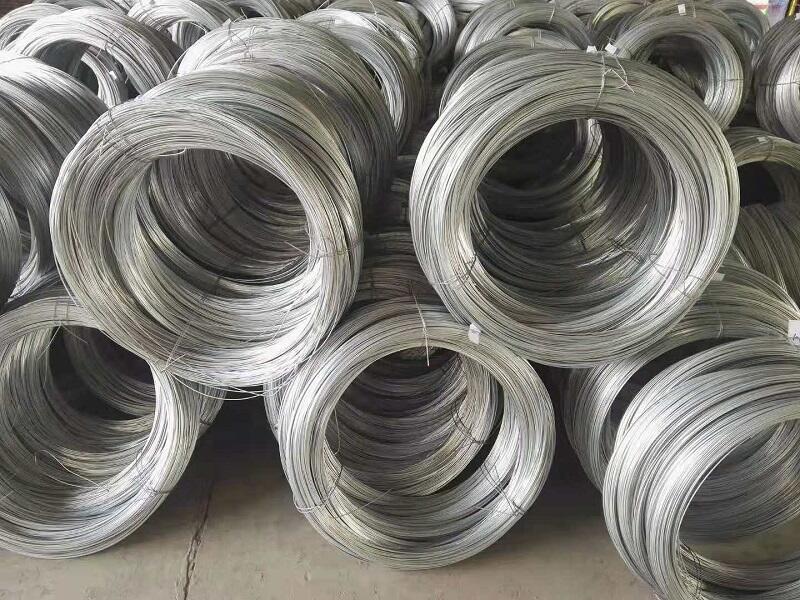
Understanding Tensile Strength and Its Importance for Galvanized Wire
What Is Tensile Strength and Why It Matters for Galvanized Wire
Tensile strength basically tells us how much force a material can handle before snapping apart, which means it's all about the maximum stress point that galvanized wire reaches right before it breaks. When we look at important applications such as building suspension bridges, setting up farm fences, or securing equipment on ships, the tensile strength really matters because it affects both safety and how long things last. Most galvanized wires made from mild steel fall somewhere between 270 to 500 MPa in terms of tensile strength, giving them just enough toughness without being too rigid for everyday structural work. The numbers matter a lot to engineers who need to pick materials strong enough to handle whatever forces get thrown their way during normal operation, otherwise those load bearing systems might fail catastrophically.
The Role of Zinc Coating in Structural Performance
Galvanized wire gets its strength from the zinc coating that covers it. This coating does two main things at once: stops corrosion and adds extra mechanical strength. When the zinc bonds with the steel underneath, it actually makes the wire last much longer than regular steel would in countryside areas. We're talking about maybe 50 to 75 years before serious problems start showing up from rust eating away at the metal. What's really interesting is how this zinc layer works when the wire is under pressure. It spreads out the stress points so cracks don't spread as easily through the material. That combination of fighting corrosion and standing up to repeated stress makes galvanized wire perfect for things like fences, utility poles, and other structures sitting outside where they get hit by rain, snow, and constant movement over time.
Overview of ASTM A931 for Galvanized Wire Tensile Testing
The ASTM A931 sets out how to test the tensile strength of steel wires coated with metal, making sure we get reliable readings on things like when they start to give way, how much they stretch before breaking, and what happens at the point of failure. According to this standard, tests need to be run at specific speeds usually around 12.5 mm per minute and special grips must be used so the wire doesn't slip during testing. Following these guidelines matters a lot for maintaining quality control in both building projects and manufacturing plants. When companies stick to ASTM A931, they can compare different batches of wire side by side and spot problems early on, like when the zinc coating isn't sticking properly or the underlying steel just isn't up to spec.
Key Mechanical Properties and Industry Standards for Galvanized Wire
Fundamental Mechanics: Stress, Strain, and Yield Point in Galvanized Wire
Tensile testing evaluates three key mechanical properties in galvanized wire:
- Stress: Force per unit area during stretching (typically 270–500 MPa for annealed galvanized steel)
- Strain: Percentage deformation under load (20–30% elongation at break)
- Yield Point: Stress level where permanent deformation begins (180–350 MPa for galvanized wire)
Galvanized wire’s yield strength aligns with ASTM A563 standards for structural fasteners, confirming its suitability for load-bearing applications. The following comparison highlights performance differences based on processing:
| Property | Galvanized Wire (Annealed) | Cold-Drawn Galvanized Wire |
|---|---|---|
| Tensile Strength | 270–450 MPa | 500–750 MPa |
| Yield Strength | 200–350 MPa | 400–600 MPa |
| Elongation | 20–30% | 8–15% |
Cold drawing significantly increases strength but reduces ductility due to strain hardening.
Elongation Testing as a Complement to Tensile Strength Measurement
Tensile strength tells us about how much weight something can hold before breaking, but when we talk about things that need to bend without snapping, elongation tests according to ASTM E8 become really important. Galvanized wire usually stretches between 20% to 30% before failing, which means it can deform quite a bit without rupturing. This property makes the material work well in places like earthquake bracing systems and those massive suspension bridges where materials must handle constant movement and sudden stresses from all directions.
Impact of Cold Drawing on Tensile Properties of Galvanized Wire
When cold drawing is applied, the tensile strength goes up somewhere between 45 and 65 percent because of strain hardening effects. But there's a catch—the material loses about 40 to 50 percent of its ability to stretch before breaking. Finding the right balance here matters a lot. Wire that gets too strong (around 750 MPa or higher) becomes brittle and prone to cracking when pushed too far. On the flip side, wire that isn't drawn enough (below 500 MPa) will just keep stretching out under load instead of holding shape. Most engineers suggest keeping at least 10 to 12 percent elongation capacity for regular construction work so structures can handle unexpected stresses without failing suddenly.
Equipment and Setup for Accurate Tensile Testing of Galvanized Wire
Selecting the Right Universal Testing Machine (UTM)
When testing galvanized wire, most experts suggest using Universal Testing Machines (UTMs) that can handle loads over 600 kN for reliable results. The best machines follow industry standards like ASTM E8 and ISO 6892-1, which helps maintain consistency across tests thanks to their closed-loop control systems keeping load rates within about 1% accuracy. For smaller wires below 10 mm in diameter, special hydraulic grips with those rough serrated jaws really make a difference in preventing slippage when stress levels reach around 1,200 MPa or higher. Proper alignment is just as important too. Good quality alignment fixtures help keep everything straight during testing so we get uniform pressure along the entire length of the wire without any unwanted twisting or bending that could throw off our measurements.
Calibration and Gripping Techniques to Prevent Slippage
Annual calibration of load cells and displacement sensors reduces measurement errors by up to 72% (NIST 2023). Pneumatic grips provide 30% more consistent clamping force than manual systems for galvanized specimens. Applying a pre-tension load (5–10% of expected breaking point) eliminates slack and ensures accurate data capture from the initial loading phase.
Data Acquisition Systems and Real-Time Load Monitoring
Today's Universal Testing Machines come equipped with photoelectric encoders paired with specialized software capable of capturing stress strain data at an impressive rate of 1000 samples per second. The ability to monitor these processes in real time means we can spot problems with the zinc coating much earlier on. According to research published in the Journal of Materials Engineering last year, this approach detects issues around 40 percent quicker compared to traditional hands-on inspections. When automated systems notice readings that differ by more than 5% from standard reference curves, they automatically alert operators so necessary changes can be made right away during either production runs or quality checks.
Testing Galvanized Wire Tensile Strength: Step-by-Step Process
Sample Preparation: Cutting and Conditioning Galvanized Wire
Cut specimens to 300 mm ±2 mm using abrasion-resistant shears to avoid damaging the zinc layer. Clean surfaces with solvent to remove contaminants, then condition samples at 23°C ±2°C for 24 hours. This stabilization step eliminates thermal expansion effects that could otherwise skew load measurements by up to 12%, according to 2023 metallurgical studies.
Mounting the Specimen in the Universal Testing Machine
Clamp pre-marked wire segments securely in serrated grips lined with galvanized-compatible shim stock (0.8–1.2 mm thick). Ensure axial alignment within 0.5° deviation; misalignment beyond 1° can reduce measured tensile strength by 18% (NIST calibration data), leading to inaccurate assessments of material performance.
Applying Load Gradually Until Failure (ASTM A931 Compliance)
Start the test with the crosshead moving at about 500 mm per minute, keeping the strain rate steady until we detect the yield point. According to section 8.3 of ASTM A931 standard, most universal testing machines these days will actually slow down to around 50 mm per minute once yielding occurs. This helps get better readings on how much plastic deformation happens during testing. The whole two step process really matters because it stops samples from breaking too early and gives us those detailed stress strain curves that are so important when analyzing material quality. Labs find this method works best for getting reliable data they can actually use in their reports.
Recording Maximum Load, Elongation, and Fracture Characteristics
Data acquisition systems track seven critical parameters:
| Measurement | Typical Galvanized Wire Range | Significance |
|---|---|---|
| Maximum Load | 450–650 N/mm² | Determines ultimate tensile strength |
| Uniform Elongation | 8–12% | Indicates ductility |
| Necking Percentage | 15–20% | Reveals post-yield deformation |
| Fracture Angle | 45° ± 10° | Identifies shear vs. tensile failure |
Document fracture surface morphology using macro-photography to detect zinc coating defects exceeding 5 µm—a vital checkpoint for validating long-term corrosion resistance.
Interpreting Tensile Test Results for Quality Assurance
Analyzing Stress-Strain Curves from Galvanized Wire Tests
Galvanized wire's behavior under tension becomes clear when looking at stress-strain curves, which show the difference between elastic deformation that can bounce back and plastic deformation that stays permanent. The steepness of the curve in the elastic area tells us about Young's Modulus, basically measuring how stiff the material is. When it comes to yield strength, where things start to change permanently, most commercial grade galvanized wires hit around 1,200 to 1,400 MPa. And then there's the ultimate tensile strength, that top point on the graph, usually somewhere between 1,500 and 1,700 MPa. This number matters because it shows what kind of force the wire can handle before finally breaking apart.
Benchmark Values for Tensile Strength in Commercial Galvanized Wire
ASTM A931 defines minimum tensile strength requirements based on wire diameter:
| Wire Diameter (mm) | Minimum Tensile Strength (MPa) | Common Applications |
|---|---|---|
| 2.0–3.0 | 1,400 | Agricultural fencing |
| 3.0–5.0 | 1,350 | Construction cable cores |
| >5.0 | 1,300 | Maritime safety cable systems |
Deviations beyond ±5% suggest potential issues such as improper galvanization or incorrect alloy composition.
Common Defects Detected Through Inconsistent Test Outcomes
When we see irregular stress strain patterns in materials testing, it's usually a red flag for problems back at the factory floor. Components that break down before reaching 1,100 MPa strength are often telling us there's something wrong with how coatings were applied, which can leave them vulnerable to rust and degradation over time. Another warning sign comes when elongation rates drop suddenly below 10% - this typically means the material has become too brittle, probably because it was overheated during the cold drawing process. Industry data from automotive parts manufacturers shows these kinds of irregularities need to be addressed through rework before they cause catastrophic failures once those components are actually put into service and subjected to real world stresses and strains.
FAQ Section
Why is the tensile strength important for galvanized wire?
Tensile strength is crucial as it determines how much force a wire can withstand before breaking. This is important for applications where safety and durability are a concern, such as in bridges, fences, and ship equipment.
What role does zinc coating play in galvanized wire?
Zinc coating prevents corrosion and enhances the mechanical strength of the wire. It extends the wire’s lifespan and distributes stress to prevent cracking under pressure.
How does cold drawing affect galvanized wire?
Cold drawing increases tensile strength through strain hardening but decreases ductility. This requires a balance to ensure the wire remains strong but not so brittle that it cracks under stress.
What is the ASTM A931 standard for?
ASTM A931 outlines procedures for testing the tensile strength of metal-coated steel wires to ensure consistent and reliable quality assessments.
What can irregular stress-strain patterns indicate?
They might signal factory issues such as improper coating application or issues in the drawing process, leading to vulnerabilities like brittleness or susceptibility to rust.
Table of Contents
- Understanding Tensile Strength and Its Importance for Galvanized Wire
- Key Mechanical Properties and Industry Standards for Galvanized Wire
- Equipment and Setup for Accurate Tensile Testing of Galvanized Wire
- Testing Galvanized Wire Tensile Strength: Step-by-Step Process
- Interpreting Tensile Test Results for Quality Assurance
- FAQ Section