 EN
EN

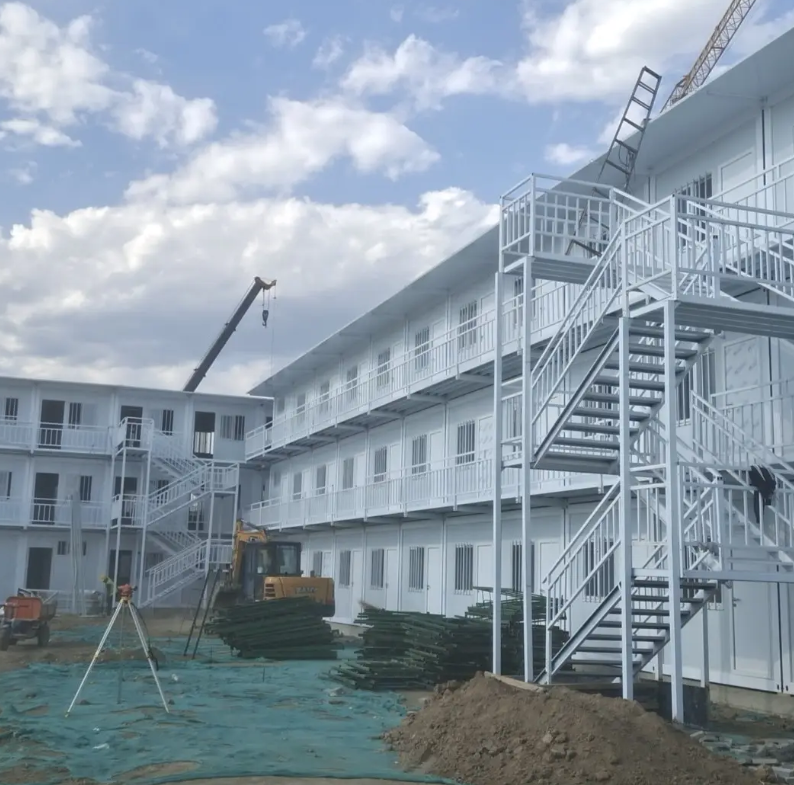
Material Selection for Long-Term Durability in Foldable Container House Hinges
Stainless Steel 316 vs. Galvanized Structural Steel in Coastal and High-Humidity Environments
What kind of material goes into making hinges really affects how long they last when exposed to harsh environments. Take stainless steel 316 for instance. It has about 2 to 3 percent molybdenum which gives it much better protection against chlorides than regular galvanized steel does. When put through salt spray testing according to ASTM B117 standards, these SS316 hinges can handle well over 5,000 hours before showing any signs of rust. That's actually more than four times longer than what galvanized steel manages around 1,200 hours give or take. Real world applications show this means SS316 hinges typically last 15 years or more in places like coastal areas or anywhere with humidity above 60%, while galvanized ones only make it about 5 to 8 years under similar conditions. What makes SS316 so durable is its natural chromium oxide coating that keeps forming on the surface even after damage occurs. This protects those critical pivot points from developing pits during all those opening and closing motions over time.
Advanced Surface Engineering: Zinc-Nickel Electroplating + UV-Stable Polymer Topcoats
Full SS316 construction just doesn't fit the budget for many projects, so multi layer surface engineering becomes the go to solution for good protection against wear and tear. Zinc nickel electroplating at around 12 to 15 microns thick offers sacrificial protection that cuts down on corrosion problems compared to regular zinc plating, sometimes by as much as 80%. Applying a top coat made from UV stable fluoropolymers like PVDF gives surfaces a water repelling quality that helps shake off moisture. These coatings also hold their color and shine for about ten years even when exposed to harsh sun conditions. Plus they resist scratches pretty well too, reaching at least 2H hardness on the pencil test scale. Together, this combination passes the 1000 hour salt spray test according to ISO 9227 standards, which makes it workable for those inland foldable container houses that deal with changing humidity throughout the seasons. Keep in mind though, coatings tend to break down before we actually see damage to the base material underneath, so checking them every six months visually and testing adhesion remains important maintenance practice.
Mechanical Performance Testing Tailored to Foldable Container House Applications
Cyclic Fatigue Testing: Simulating 10,000+ Folding Cycles per Installation
The hinges on foldable container houses face constant mechanical stress when being transported, deployed on site, and then reconfigured for different uses. This kind of wear and tear means they need thorough fatigue testing before anyone would want to rely on them. Most experts in the field agree that proper validation should involve testing well past 10,000 operational cycles, which translates roughly to 15 years or so if someone uses the hinge every two weeks. Testing protocols try to mimic what actually happens out there in the real world. They check how the hinge handles full range motion from completely closed to fully open under maximum weight loads. There's also testing for the kinds of vibrations experienced during transportation, usually around 3 to 5 times normal gravity force. And finally, they subject the hinges to extreme temperature changes ranging from minus 30 degrees Celsius all the way up to plus 50 degrees. Hinges that pass these tests show less than 0.2 millimeters of permanent bending after going through 12,000 cycles. What's really important is that there shouldn't be any cracks forming or plastic deformation at the points where parts connect together.
Torque Consistency & Wear Analysis Under Load: Aligning with ISO 15364 and ASTM F1569
When pivots remain stable during long periods of weight bearing, they avoid gradual misalignment issues that lead to early joint failures. Engineers typically test these components using three main criteria: first, torque retention should stay above 85% even after going through 5,000 load cycles. Second, they look closely at tiny wear patterns forming where the bushings meet pins. Third comes the tricky part involving accelerated corrosion wear tests, which simulate situations where salt gets onto surfaces before applying shear forces. Meeting both ISO 15364 standards for marine grade hardware and ASTM F1569 requirements for structural pivots means these hinges won't slip out of place or lose alignment when subjected to loads 50% higher than their rated capacity. Laboratory results from independent testing facilities indicate that hinges treated with zinc nickel coating experience roughly 63% less wear compared to regular galvanized versions tested under continuous 200kg static loads. This clearly shows why investing in proper surface treatments makes such a big difference in extending component life spans.
Preventive Maintenance Protocols for Foldable Container House Hinges
Biannual Inspection Checklist: Pivot Integrity, Locking Mechanism Functionality, and Fastener Torque Retention
Structured preventive maintenance extends functional hinge life by 40â60% compared to reactive repairs (Facility Management Journal, 2024). Conduct inspections every six months using this field-validated checklist:
- Pivot Integrity: Use ultrasonic testing to detect subsurface fatigue in hinge barrels; reject units with deformation exceeding 0.5 mm tolerance
- Locking Mechanism Functionality: Verify engagement strength under 150 kgf load and assess spring tension retentionâloss >20% indicates replacement need
- Fastener Torque Retention: Confirm bolt tension remains within ±10% of original specification (typically 90â110 Nm); retorque only if below lower threshold
Immediate intervention is required for corrosion covering >15% of surface area, inconsistent folding resistance, or audible grinding during operation. Pair each inspection with silicone-based lubrication of pivot points and scheduled replacement of sacrificial anode pads in coastal or high-humidity deployments.
Environmental Resilience: Sealing, Thermal Stability, and Moisture Management
How well a foldable container house stands up to environmental stress really affects how long those hinges will last, especially when dealing with extreme temperatures, moisture levels, and salty air from coastal areas. The secret lies in good sealing technology using special rubber gaskets that resist water absorption while maintaining their shape after many expansions and contractions from heat changes. These seals need to be properly designed to make a real difference. Studies following ISO 12944 standards show that quality seals can cut down on hinge problems caused by corrosion by about 40 percent in tough conditions. That makes all the difference for structures exposed to harsh weather over time.
Thermal stability demands materials with low coefficients of thermal expansion. Stainless steel and select aluminum alloys maintain dimensional accuracy from â30°C to +50°Câpreventing binding, galling, or preload loss during ambient fluctuations. Passive ventilation channels integrated into hinge housings equalize internal/external pressure without compromising seal integrity.
Moisture management employs a three-tiered strategy:
- Drainage pathways that channel water away from pivot axes and fastener heads
- Vapor barriers applied beneath mounting plates to inhibit condensation buildup in insulated assemblies
- Sacrificial anodes, especially critical near coastal installations, to protect dissimilar metal interfaces
Together, these measures ensure long-term hinge functionânot just against corrosion, but against the synergistic degradation caused by combined thermal, mechanical, and environmental stressors.
FAQ
1. Why is stainless steel 316 preferred over galvanized steel for hinges in harsh environments?
Stainless steel 316 is preferred because it offers superior resistance to corrosion, especially from chlorides, due to its molybdenum content. It's more durable in coastal and high-humidity environments compared to galvanized steel.
2. What is the advantage of zinc-nickel electroplating for foldable container house hinges?
Zinc-nickel electroplating provides sacrificial protection and reduces corrosion significantly compared to regular zinc plating. It enhances the hinge's durability and longevity, especially in inland foldable container houses.
3. How often should the preventive maintenance of hinges be performed?
Preventive maintenance should be conducted biannually (every six months) using a structured inspection checklist to ensure hinge longevity and functionality.
Table of Contents
- Material Selection for Long-Term Durability in Foldable Container House Hinges
- Mechanical Performance Testing Tailored to Foldable Container House Applications
- Preventive Maintenance Protocols for Foldable Container House Hinges
- Environmental Resilience: Sealing, Thermal Stability, and Moisture Management