 EN
EN

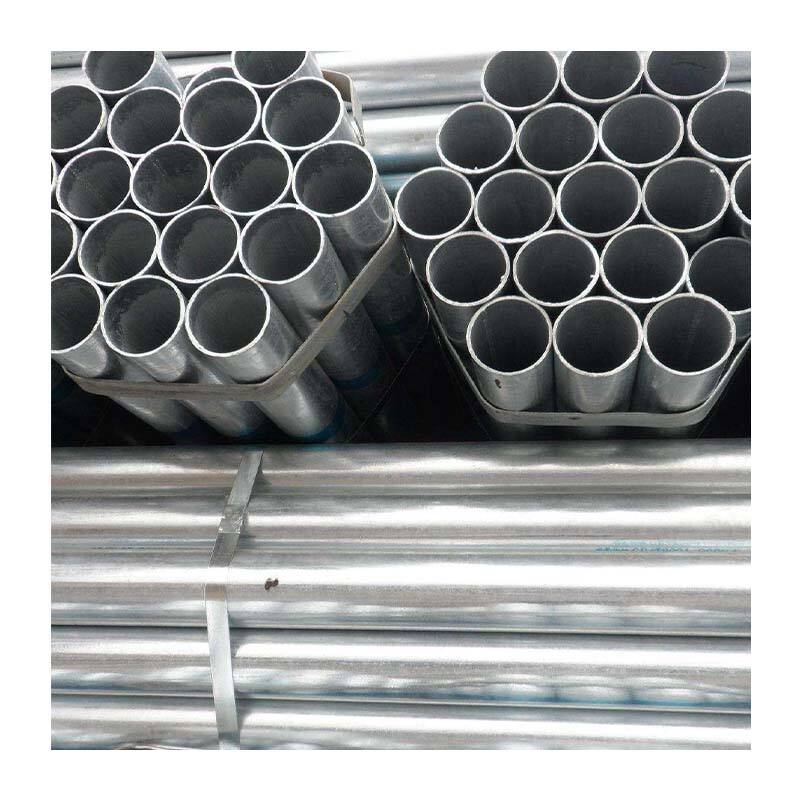
Understanding the Lifespan of Underground Galvanized Pipes
What Determines the Lifespan of Galvanized Steel Pipes?
How long galvanized steel pipes last when buried underground really depends on three main things: how good the zinc coating is, what kind of soil they're in, and whether they were installed properly. The zinc acts like a protective shield for the steel underneath, but this protection gets weaker in harsh environments. Soils that are too acidic (anything below pH 5) tend to eat away at the zinc coating much faster than normal soil would. Some studies suggest these acidic conditions might cause about 40% more zinc loss over time. Getting the installation right matters a lot too. When pipes are properly bedded and the joints are well sealed, there's less chance of physical damage and corrosion happening, which means the whole system tends to stick around longer without problems.
Average Service Life of Galvanized Pipes in Buried Applications
Most underground galvanized pipes last between 30 and 50 years under typical conditions (TopTubes 2024). However, in highly acidic soils (pH < 5), lifespan drops to 15–20 years. While galvanized steel outperforms black steel by 400% in burial applications, it falls short of modern polyethylene systems, which offer 70–100 year service lives according to material durability reports.
Above-Ground vs. Underground: Why Installation Location Matters
Buried galvanized pipes corrode 2.7× faster than above-ground installations due to constant moisture and electrochemical activity in soil. Underground environments promote microgalvanic cells, where mineral variations in the soil drive localized corrosion. With proper drainage and corrosion-resistant wraps, this degradation differential can be reduced by 55%, extending functional life.
Corrosion Mechanisms in Buried Galvanized Pipe Systems
How Zinc Coating Degrades Over Time in Soil Environments
Zinc offers protection to steel by acting as a sacrificial anode, though how fast it wears away depends heavily on what's in the surrounding soil. Acidic conditions where pH drops below 5 cause zinc to disappear at rates between 1.5 and 4 micrometers per year, which is almost twice as fast as the 0.7 micrometer annual loss seen in neutral soils according to research from Persson and colleagues back in 2017. When there are high amounts of chloride present, corrosion tends to form pits that get worse over time. And when soil resistivity falls under 1,000 ohm-cm mark, this makes everything conductive enough to speed up electron movement, ultimately cutting down pipe life expectancy by about one third as noted in a recent 2023 investigation.
The Role of Moisture and Trapped Water in Internal Corrosion
When water sits still, it creates these little pockets under deposits where oxygen builds up differently, forming spots that eat away at metal much quicker than normal wear and tear. Some studies looked at 45 systems that had already failed, and they found something interesting: when there's carbon dioxide or sulfates in the water, the inside corrosion happens about three times faster compared to just regular wall thinning over time (Liu et al., 2012). Looking at irrigation pipes in 2018 showed similar problems. Eight out of ten leaks actually started right at those threaded connections where water tends to collect. The rusting there was pretty bad too, clocking in around 2.8 millimeters per year according to Della Rovere and colleagues back in 2013.
Case Study: Premature Failure of Underground Galvanized Pipe Due to Corrosion
A municipal water system replaced 12 miles of galvanized piping after experiencing 18 leaks within five years of a 30-year benchmark. Forensic investigation identified key causes:
- Soil pH of 4.2, dissolving 92% of the zinc coating within seven years
- Groundwater chlorides exceeding 500 ppm
- Poorly sealed joints exposing bare steel
The measured corrosion rate was 0.25 mm/year—four times the expected 0.06 mm/year—highlighting how environmental extremes drastically shorten service life (Colombo et al., 2018).
Soil and Environmental Factors Impacting Galvanized Pipe Durability
How Soil pH and Chemical Composition Accelerate Zinc Loss
When soil pH drops below 6.5, zinc coatings start breaking down at roughly three times the rate compared to soils with a neutral pH level. The presence of chlorides and sulfates, which are often found along coastal areas or roads where salt is used for melting ice, causes chemical reactions that eat away at zinc coatings pretty quickly sometimes as fast as 1.2 mils per year. Take a look at this real world scenario: if we have a typical zinc coating measuring around 2.8 mils thick, it might only hold out for about 12 years when buried in acidic soil with pH 4.5. But place the same coating in neutral soil with pH 7.0 and it could easily last well beyond 35 years instead.
Water Quality and Its Influence on Corrosion Rates
The mineral content in water matters quite a bit when it comes to pipe integrity. Hard water with over 180 parts per million creates those nasty little corrosive pockets underneath scale buildup, whereas soft water below 60 ppm just keeps eating away at zinc coatings continuously. Researchers back in 2023 looked into this stuff and discovered something pretty telling - groundwater rich in chloride (at least 500 ppm) causes holes in pipes about 40 percent faster compared to areas where the water has fewer minerals overall. Good drainage systems really help combat all these issues because they stop water from sitting around on pipes for too long after installation. That's why many engineers now emphasize proper slope calculations during construction phases.
Regional Performance: Galvanized Pipes in Wet vs. Dry Climates
| Climate Type | Average Lifespan | Primary Degradation Factors |
|---|---|---|
| Arid (e.g., Arizona) | 45–60 years | Sand abrasion, thermal expansion/contraction |
| Humid (e.g., Florida) | 15–25 years | Constant moisture, saltwater intrusion |
Pipes in wet soils corrode 2.3× faster due to persistent moisture enabling oxygen differential cells. Annual rainfall over 40 inches typically halves galvanized pipe longevity compared to areas receiving less than 20 inches.
Best Installation Practices to Maximize Galvanized Pipe Longevity
Proper Bedding and Backfill Techniques for Underground Protection
When pipes aren't properly bedded, their galvanized coatings can wear away much faster, sometimes cutting lifespan by around 40% because of those annoying sharp rocks in the soil (ASCE found this out in 2024). Most contractors know that putting down at least six inches of crushed stone creates a protective layer between the pipe and whatever dirt might be kicking around. And when filling in behind the pipe, getting that backfill packed down to about 90% of what's called Proctor density helps keep everything stable. The American Water Works Association actually requires these methods for any underground steel water lines, mainly so those protective coatings stay intact over time. Makes sense really, since nobody wants their pipes failing prematurely just because someone skipped a step during installation.
Preventing Galvanic Corrosion with Compatible Fittings
Using dissimilar metals accelerates corrosion up to 8× in buried systems. Malleable iron fittings with galvanic potential within 0.15 volts of the zinc coating help maintain compatibility. Dielectric unions should be limited to above-ground use—when buried, they trap moisture and increase corrosion rates by 22% (NACE 2025 survey).
Emerging Trends: Protective Wraps and Cathodic Protection
Polyethylene sleeve wraps, 200 mils thick, extend service life by 10–15 years compared to traditional asphalt coatings. Impressed current cathodic protection systems have demonstrated 98.7% zinc preservation over 20 years in field trials, though they require annual voltage monitoring (Materials Performance 2023).
Galvanized Pipe vs. Alternative Materials: A Longevity Comparison
Galvanized vs. PVC: Cost, Durability, and Suitability for Burial
Galvanized steel and PVC occupy opposite ends of the performance-cost spectrum. Galvanized pipe withstands 2–3× more physical stress than PVC, making it ideal for high-traffic or load-bearing zones. However, PVC’s 20–30% lower material cost and complete corrosion resistance make it favorable for non-structural drainage in stable soil conditions.
| Property | Galvanized Pipe | PVC Pipe |
|---|---|---|
| Avg. Lifespan | 20–50 years | 10–20 years |
| Soil pH Tolerance | 5.5–12.5 | 4.0–14.0 |
| Impact Resistance | 350–500 PSI | 100–150 PSI |
| Cost (per linear ft) | $3.50–$5.80 | $1.20–$2.40 |
Stainless Steel and Copper in Highly Corrosive Soil Conditions
In aggressive environments—such as soils with pH < 5 or chloride levels >500 ppm—galvanized pipes may fail within 15 years. Stainless steel 316L offers superior resilience, lasting over 50 years, but comes at 4–6× the cost. Copper provides similar corrosion resistance but poses higher theft risk and costs 70% more than galvanized options.
Why Galvanized Pipes Remain in Use Despite Limited Lifespan
Galvanized steel maintains a 28% share in municipal water systems due to three enduring advantages:
- Fitting compatibility with legacy infrastructure, crucial in 63% of urban repair projects
- Mechanical strength that outperforms plastics during freeze-thaw cycles
- Simpler replacement logistics compared to trench-intensive PVC networks
A 2024 municipal survey found 41% of engineers still specify galvanized pipe for shallow-buried (<3 ft) installations, citing its optimal balance of durability and cost at $4.20/lf installed—versus $7.50/lf for corrosion-resistant alloys.
FAQ
How long do underground galvanized pipes typically last?
Underground galvanized pipes usually last between 30 and 50 years under normal conditions. However, in highly acidic soils, their lifespan may reduce to 15–20 years.
What soil conditions affect galvanized pipe durability?
Soil conditions such as acidity (low pH levels), presence of chlorides, and sulfates significantly impact the durability of galvanized pipes, accelerating corrosion and zinc loss.
How can installation practices influence pipe lifespan?
Correct installation practices, including proper bedding, backfill techniques, and compatible fittings, can extend the lifespan of galvanized pipes by protecting zinc coatings from premature wear.
Why are galvanized pipes still in use despite their limited lifespan?
Galvanized pipes remain popular due to their fitting compatibility with existing systems, mechanical strength, and simpler logistics for replacement compared to more modern alternatives.
Table of Contents
- Understanding the Lifespan of Underground Galvanized Pipes
- Corrosion Mechanisms in Buried Galvanized Pipe Systems
- Soil and Environmental Factors Impacting Galvanized Pipe Durability
- Best Installation Practices to Maximize Galvanized Pipe Longevity
- Galvanized Pipe vs. Alternative Materials: A Longevity Comparison
- FAQ